
Kansas Sources for Previous Residents
One address can leave several kinds of evidence, and each record answers a different question. Kansas has no single statewide deed index or common online start year, so the county record chain begins with the office for the parcel. Historical directories, census schedules, and maps add household or building context, while a deed establishes a transfer between named parties.
| Source | Years It Covers | Where Held | What It Shows |
|---|---|---|---|
| County deeds | County index depth varies; no statewide cutoff found | County Register of Deeds | Named parties, transfer dates, legal descriptions |
| Kansas Historical Society directories | Finding aids from 1859 to date; local gaps vary | State Archives and Library, Topeka | Address, occupant, and sometimes occupation clues |
| Topeka city directories | 1870 to present | Topeka Room and library resources | Names and dated street addresses |
| Lawrence criss-cross directory | 1978–1996 in the LOC inventory | Library of Congress; local runs vary | Address-to-name lookup for listed years |
| Federal and Kansas censuses | Federal through 1950; state schedules 1855–1925 | Census Bureau, KSHS, and libraries | Household snapshot, not an annual address list |
| Sanborn maps | Kansas digitization project, 1883–1922 | KU Spencer and local library collections | Building footprint and lot context, not occupants |
| City permit or code records | Coverage varies by city and system | Municipal custodian or online city portal | Work or case dates tied to an address or parcel |
For a recent ownership question, begin with the county parcel card and deed index. For a household question, use a dated directory and census together. For an older building, a Sanborn sheet or house file can help place the address in time, but it does not name everyone who lived there. The Kansas Historical Society's statewide finding aids are a route to holdings, not proof that every town has a complete run. For previous residents, the date and record type matter as much as the name.
Tracing Past Residents Through Kansas Deeds
Follow transfers backward from the current parcel rather than searching only by its present street string. The legal description, parcel number, and deed reference help connect records when a street name or number does not match an older entry. Keep the listed owner distinct from an occupant: a deed records parties to a conveyance, and a mailing address may point somewhere else.
- Locate the parcel in the county appraiser or GIS record and copy its situs address, parcel identifier, and full legal description.
- Search the current owner as grantee in that county's deed index. Note the grantor, recording date, instrument or book-page number, and legal description.
- Search the prior owner or seller as grantee to find the earlier acquisition, then repeat backward through each transfer.
- When the street text no longer matches, search by the legal description, lot and block, subdivision, or referenced prior deed.
- Keep a dated chain and mark any gap for follow-up instead of treating the first online result as the first owner.
- Grantor / grantee
- The grantor transfers an interest; the grantee receives it. In a backward search, the seller in one deed may be the grantee in an earlier deed.
- Chain of title
- The linked sequence of recorded transfers for the parcel, each tied to a date and instrument.
- Legal description
- The parcel's land description, such as lot, block, or section terms. It can identify the same land when a street label changes.
- Criss-cross directory
- A directory arranged by street or address as well as by name, useful for a dated household clue.
Kansas Previous Residents and County Deeds
Kansas has 105 county Register of Deeds offices, and each county controls its own deed indexes, images, fees, and older books. The state has no single public deed search, and research did not locate a statewide online cutoff. An online portal may cover recent instruments while earlier names remain in a bound index, deed book, or microfilm collection. The absence of an older result in one portal is an access gap, not proof that no deed exists.
First identify the county where the parcel sits, then use the Kansas Register of Deeds Association contact map to find that county's office. Ask the recorder which grantor and grantee indexes cover the needed years, how to inspect books or microfilm, and whether an image or copy requires a separate request. Some counties offer online search; where they do not, the counter, phone, email, written request, and local archive are practical routes. County fee schedules differ, so check with the custodian before ordering copies.
Kansas Previous Residents in Topeka's Directory Runs
The Kansas Historical Society describes city, county, farm, business, and telephone directory finding aids from 1859 to date, though the town and edition determine what survives. Topeka offers a specific long run: the Topeka Room describes city directories from 1870 to the present, and a library resource sheet identifies Polk's Topeka City Directory from 1926 through 2010. These dated volumes can connect a name to a street, but they are not a complete census of every person at an address.
Start with the Society's directory holdings and catalog to see whether the needed town and year are listed. Its State Archives and Library in Topeka has a research room and microfilm; some Kansas directory images are available through Ancestry to 1963 for Kansas residents, and microfilm can be requested through interlibrary loan. Topeka local-history materials are available through the library's Topeka Room, with some licensed resources such as HeritageQuest accessed through the library. Verify the year and access conditions for the exact title before planning a visit.
An entry may give a street address, occupation, business address, spouse or widow notation, and an owner-or-renter mark, but details vary by publisher and year. Telephone volumes usually add a number rather than the fuller context of a city directory. For previous residents, preserve the printed abbreviation and spelling, then compare name and street indexes; OCR can miss punctuation or read a number poorly.
Lawrence Address Clues for Kansas Previous Residents
The Library of Congress's address-directory inventory includes a Lawrence and vicinity criss-cross run for 1978–1996, plus a Kansas Northwest Regional edition for 1994/95. That is a useful bridge when the question starts with a place rather than a person's name. Coverage is specific to those listed editions; it should not be read as a continuous statewide Kansas directory series.
The Library of Congress criss-cross directory guide records the Lawrence years and explains how uncataloged address directories are requested.
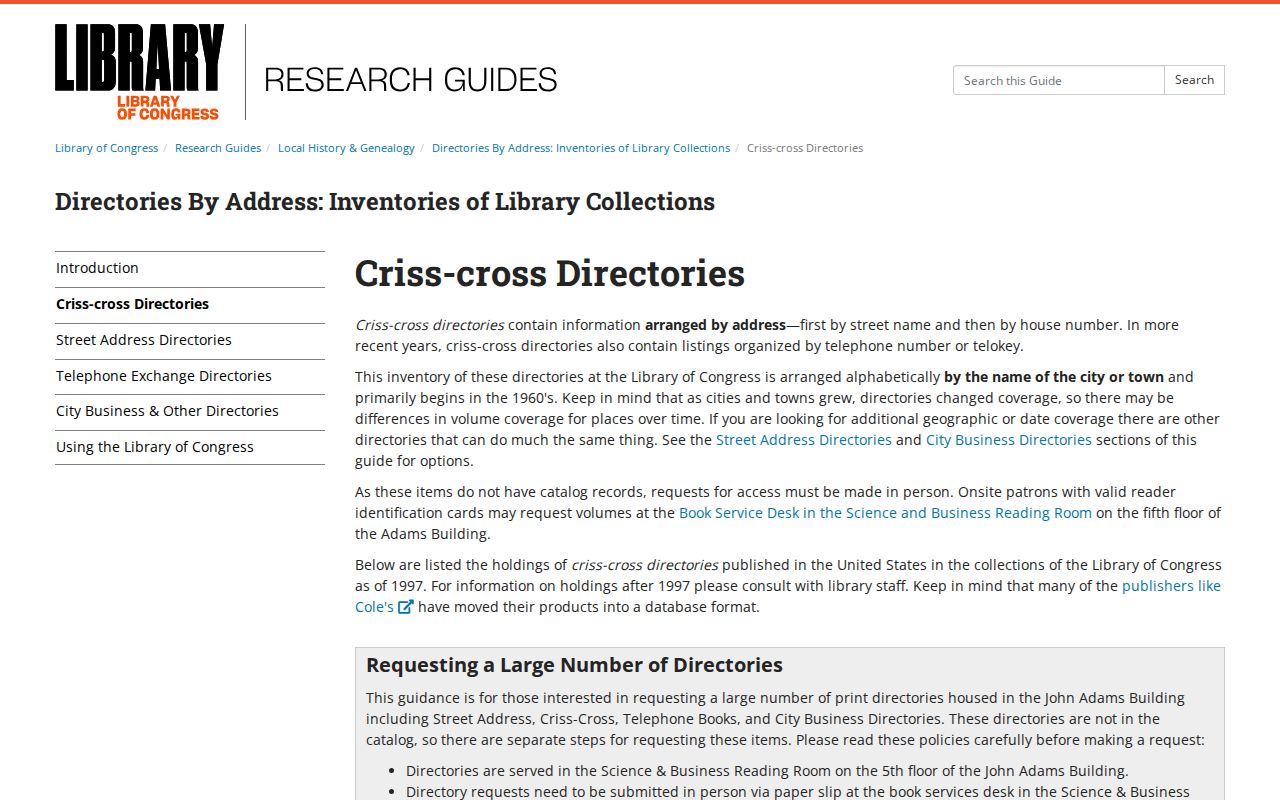
For many uncataloged items, a reader submits a paper request slip in the John Adams Building reading room and specifies the directory type, location, state, and year; nearby library or HeritageQuest runs may add other years.
Topeka House Files for Kansas Previous Residents
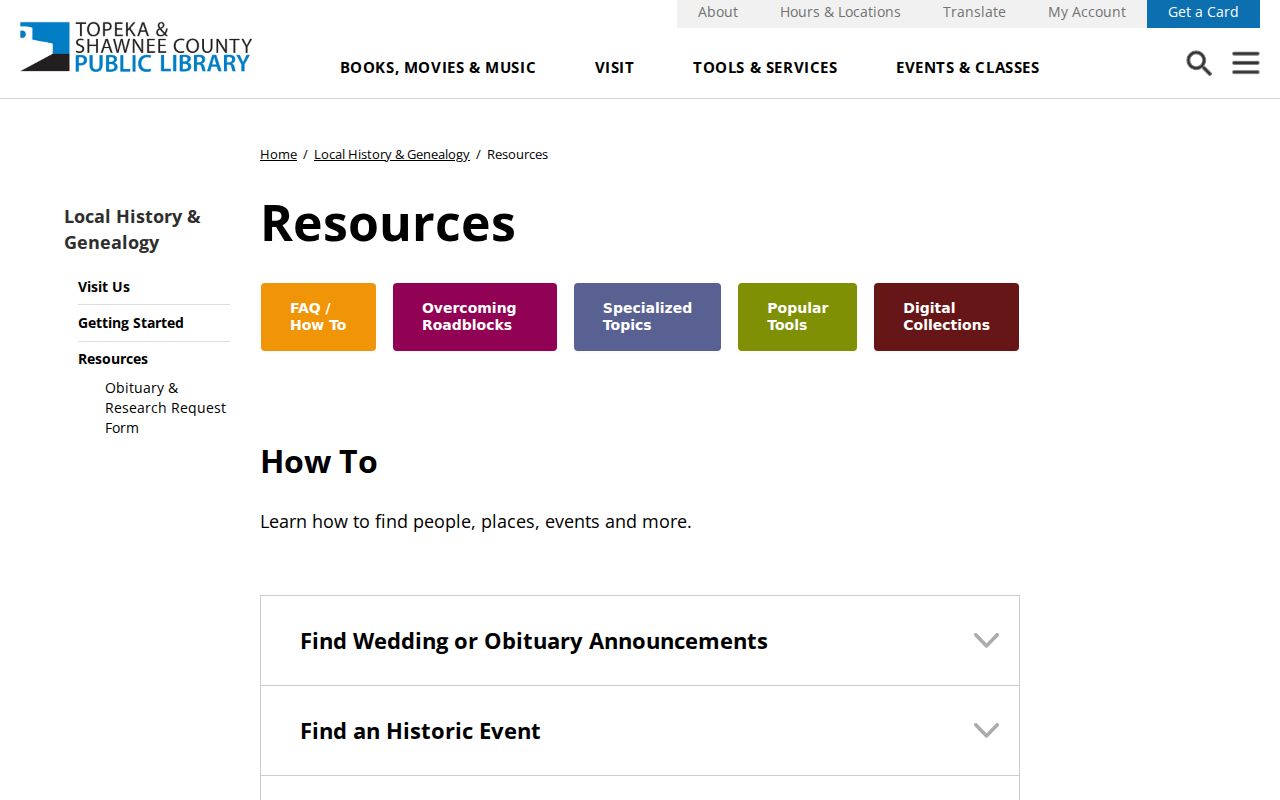
Topeka's local-history guide gives a direct address-based route: search its index under “HOUSES” and the street address for clippings or photographs. The same local collection pairs house files with directories, property research, newspapers, obituary material, maps, and Sanborn sheets. It gives a way to investigate a particular building without assuming that a statewide index will answer a neighborhood question.
Check the library's local-history resource page for the current house-history workflow, then ask the Topeka Room about the address file, directory year, and map coverage that fits the parcel. This is a research-room and collection route as well as an online guide. The Kansas Historical Society can also help identify a statewide holding or microfilm title when a local shelf does not have the needed year.
Compare a clipping or photograph with the dated deed and directory entry; the house-file index is a collection aid, not a complete list of occupants.
Kansas House History in Sanborn Maps
Digitized Sanborn fire-insurance maps cover Kansas cities and towns in the Spencer Research Library project for 1883–1922; Topeka also has a local Sanborn collection. A sheet can show a building footprint, lot, street, and use at a point in time. It can help test whether an address and structure existed in a particular form, but it does not establish a resident's name or prove occupancy.
Compare the map's block and lot with the deed description and a directory entry from a nearby year. For a building change outside the map period, contact the city or county permit custodian for an address and date-range search, or make a specific Kansas Open Records Act request. Wichita's municipal code layer, for example, exposes address, parcel, case status, type, milestone, and processed-date fields, but its inspected service does not state a complete historic start year. Do not infer a citywide permit archive from one map layer.
Kansas Previous Residents in Old Records
A deed trail can show who held title, while directories and census schedules add household evidence. The Kansas directory collections and how to read their entries are covered on the Kansas city directories page. For an address, look up the street section in a year near the deed date, then use the alphabetical section to read the listed occupation or household notation. Preserve the publisher's spelling and marks; a missing entry can reflect a skipped edition, uneven coverage, or a number mismatch.
- Choose a directory year close to the transfer and record the exact street spelling and number.
- Check the alphabetical listing for the name and household notation, then compare an address or criss-cross section if available.
- Pair that clue with the nearest federal census year, available through 1950 under the 72-year release rule, or a Kansas state census schedule from 1855–1925.
- Use newspapers, probate, cemetery indexes, or an obituary to explain a move, death, or estate, and label each fact with its source date.
Topeka's obituary index contains more than 17,000 entries, and Wichita libraries also hold newspaper and genealogy resources. Probate may identify heirs or an executor; an obituary may describe family or a prior residence. Neither one is a current-address source, and neither should be used to claim that a person occupied the property on a particular day without dated corroboration. A report about previous residents should state which source supports each name and date.
Personal research. Use these records for a lawful house-history or family-history question, and keep claims tied to the source and date. Do not use public records to target, follow, or harass a living person.